Compliance with ADA & Section 1557
Meet the legal requirements for non-discrimination in healthcare. Our solution helps you comply with WCAG 2.1 AA, ADA, and Section 1557 of the Affordable Care Act.
Industry Solutions
Ensure equal access to healthcare for all patients. Compliant, secure, and accessible web solutions for hospitals and medical practices.
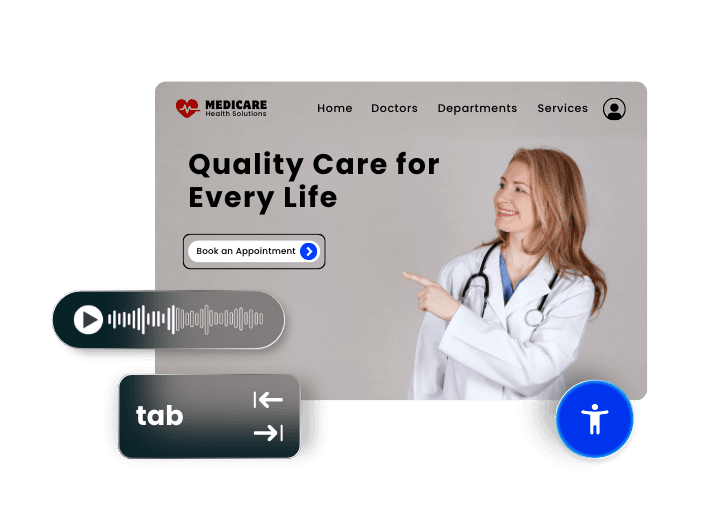
Empower patients to manage their health independently. Accessibility ensures that everyone, regardless of ability, can access vital medical information and services.
Healthcare services must be provided without bias. Inclusive websites ensure that patients with disabilities are not treated less favorably when seeking care online.
As the population ages, the prevalence of visual and motor impairments increases. Accessible sites cater to the needs of older adults, ensuring they stay connected to their care.
Digital accessibility is a key component of health equity. It removes barriers that can prevent vulnerable populations from receiving timely and appropriate care.
Ensure your site works with screen readers and has high contrast. This is crucial for patients with vision loss who need to read prescriptions or instructions.
Make sure your digital front door is open to everyone. From booking appointments to paying bills, every interaction should be accessible to all patients.
Adults in the United States have some type of disability
Americans are over 65, a group with higher rates of disability
Of the ACA prohibits discrimination in healthcare programs
Adults in the United States have some type of disability
Americans are over 65, a group with higher rates of disability
Of the ACA prohibits discrimination in healthcare programs
Meet the legal requirements for non-discrimination in healthcare. Our solution helps you comply with WCAG 2.1 AA, ADA, and Section 1557 of the Affordable Care Act.
Our accessibility solution is designed with privacy in mind. It does not collect or store Protected Health Information (PHI), ensuring HIPAA compliance.
An accessible website is easier for everyone to use. Clear navigation and readable text improve the experience for all patients, reducing frustration and missed appointments.
Proactively addressing accessibility barriers significantly reduces the risk of costly lawsuits and demand letters targeting healthcare providers.
Works with your existing hospital or practice website. Whether you use WordPress, Drupal, or a custom healthcare CMS, integration is simple and secure.
Healthcare content changes frequently. Our AI monitors your site 24/7 to ensure that new health alerts, blog posts, and provider profiles remain accessible.

HEALTHCARE INSIGHTS
Accessible websites align with the core goals of the healthcare sector. By being inclusive of various disabilities, accessible websites empower people to manage their healthcare regime independently. It’s vital that healthcare organizations encourage autonomy, rather than patients feeling like they’re passive recipients of higher-level medical decisions.
For Healthcare, Hospital & Medical Industry
Leading hospitals, healthcare and medical companies trust WebAbility with their accessibility needs so they can focus on their core mission of working to improve the health and lives of the people in their communities.
The bigger and more established your healthcare organization, the more legal exposure you may have for producing digital assets, websites and apps with possible accessibility violations. WebAbility ensures your content is standards compliant and accessible to everyone.
Contact us to learn how to get started.
Start a Free Trial
Seamless Integration
Accessibility Enhancer integrates with any website builder or CMS, enabling accessibility without a complicated technical setup.
Web Content Accessibility Guidelines
International standard defining success criteria for accessible web content, currently at version 2.x with levels A, AA, AAA.
Learn moreabout WCAGAmericans with Disabilities Act
U.S. civil rights law prohibiting discrimination based on disability. Covers public accommodations, employment, and digital accessibility.
Learn moreabout ADAAccessible Rich Internet Applications
A specification that defines roles, states, and properties to improve accessibility of complex UI when native semantics are insufficient.
Learn moreabout ARIAAssistive Technology
Assistive technology that converts on-screen text and semantics to speech or braille output.
Learn moreabout Screen ReaderAlternative Text
Text alternative for images that conveys purpose or meaning when the image cannot be perceived. Decorative images should have empty alt ("").
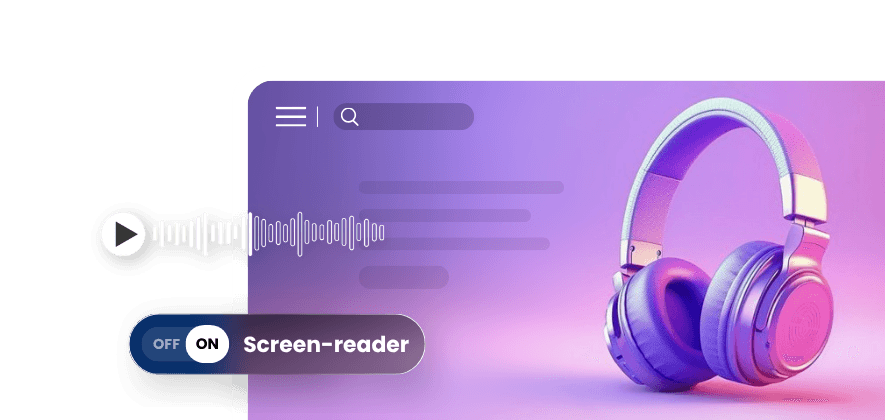
Learn moreabout Alt TextAdvanced AI adds ARIA attributes and alt text to your website, enabling screen readers to accurately interpret content for blind users. Ensures navigation landmarks and semantic HTML structure.
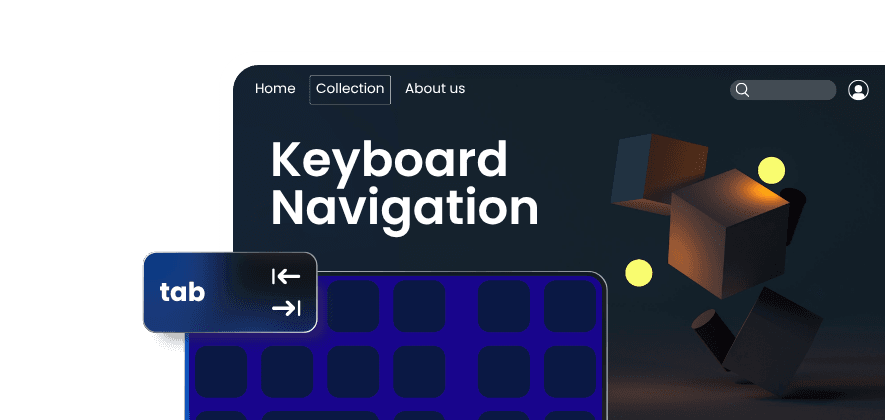
Automatically implement focus indicators and skip-to-content links for users with motor disabilities. Full keyboard control ensures all interactive elements are accessible without a mouse.
Automatically enhance color contrast ratios and provide alternative visual cues beyond color alone. Supports multiple color blindness types including protanopia with custom color filters.
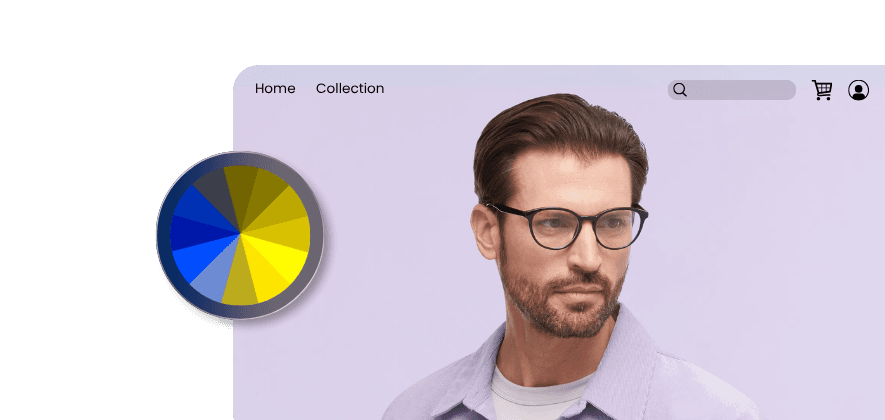
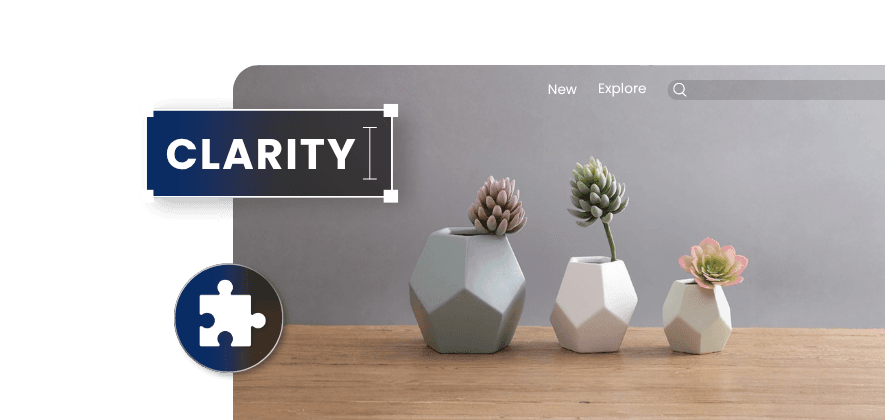
Reduce cognitive load with simplified layouts, content highlighting, and reading guides. Features include dyslexia-friendly fonts and clear visual hierarchy for easier comprehension.
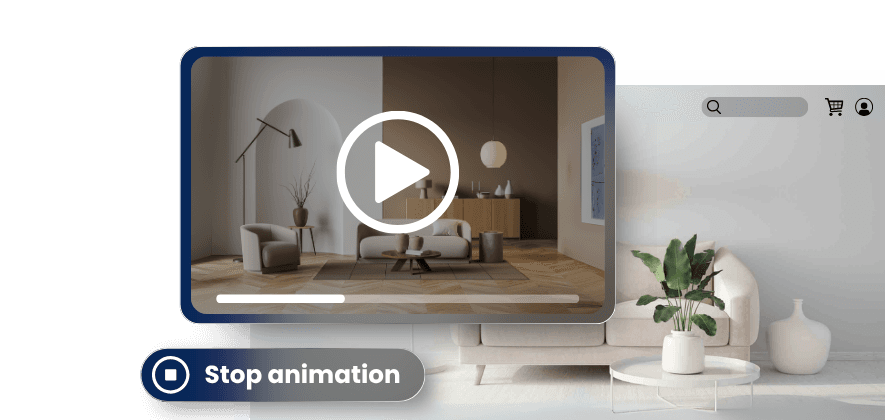
Automatically pause animations, stop auto-playing videos, and remove flashing elements that could trigger photosensitive epilepsy. Provides complete control over all moving content.
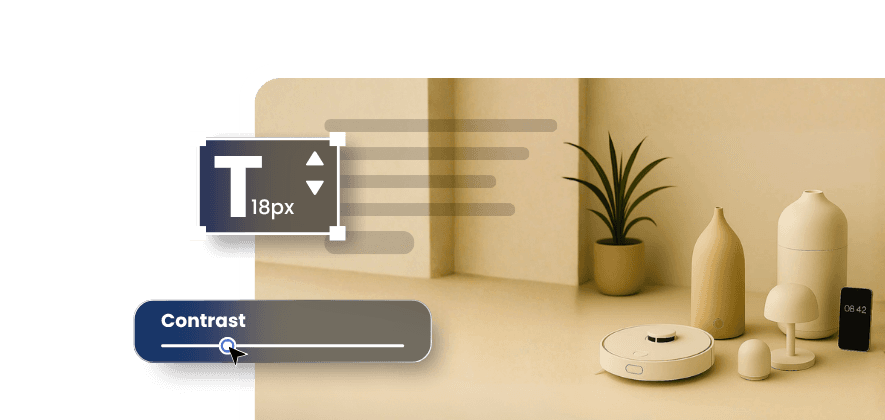
Increase font sizes, adjust spacing, invert colors, and enhance contrast for users with partial sight. Features include customizable cursor sizes and text magnification.
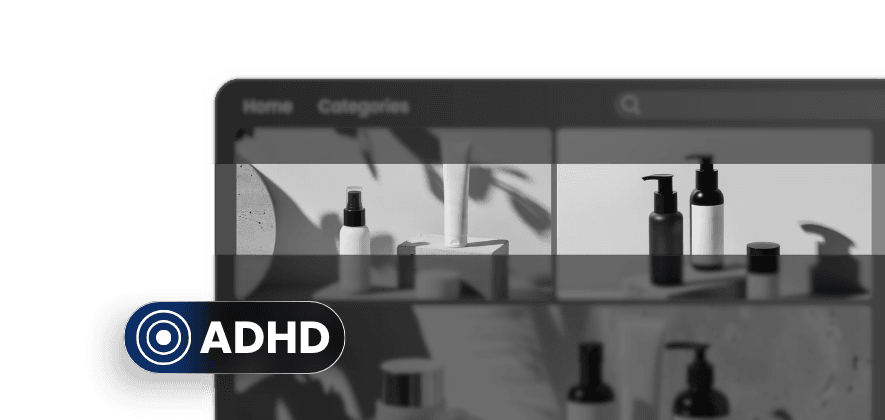
Remove visual distractions, reduce animation speeds, and provide reading masks to help users with ADHD maintain focus. Includes options to hide images and simplify layouts.
Healthcare is a fundamental right. Accessible websites ensure that patients with disabilities can independently access medical information, book appointments, and manage their health without barriers.
While WebAbility focuses on ADA and WCAG compliance for accessibility, our solution is designed to be secure and does not collect or store any Protected Health Information (PHI), making it safe for HIPAA-compliant sites.
Yes. Healthcare providers are increasingly targeted for digital accessibility violations. Ensuring your website is accessible protects your practice from legal risks and demonstrates a commitment to inclusive care.
Many accessibility features, such as larger text, clear navigation, and high contrast, directly benefit elderly patients who may have age-related vision or motor impairments.
Yes. WebAbility integrates with most web-based patient portals and CMS platforms, ensuring that the patient experience is accessible from the homepage to the secure login area.
Implementation is immediate. Once the code is added to your site, our AI begins scanning and remediating accessibility issues instantly, with significant improvements often visible within 48 hours.