Your Guide to the European Accessibility Act in 2026

Sidharth Nayyar

TL;DR: The European Accessibility Act (EAA) requires key digital products and services sold in the EU to be accessible by June 28, 2025. This guide, crafted by our accessibility experts, explains what this means for your business. Complying isn't just about avoiding fines; it's a strategic move to improve user experience for all, unlock a market of over 100 million people, and boost your conversion rates. Partnering with an experienced provider like WebAbility.io simplifies the process, turning legal requirements into a competitive advantage.
Your Essential Guide to the European Accessibility Act
Think of the European Accessibility Act as a single, unified rulebook for digital accessibility across all 27 EU member states. By its enforcement date of June 28, 2025, a whole host of products and services sold in the EU must be accessible to people with disabilities. This is a major shift, moving the focus from just the public sector to include private companies like yours.
This law has been a long time in the making. The timeline below, based on official EU publications, tracks the EAA’s journey from its initial proposal back in 2015 all the way to its full enforcement in 2025.
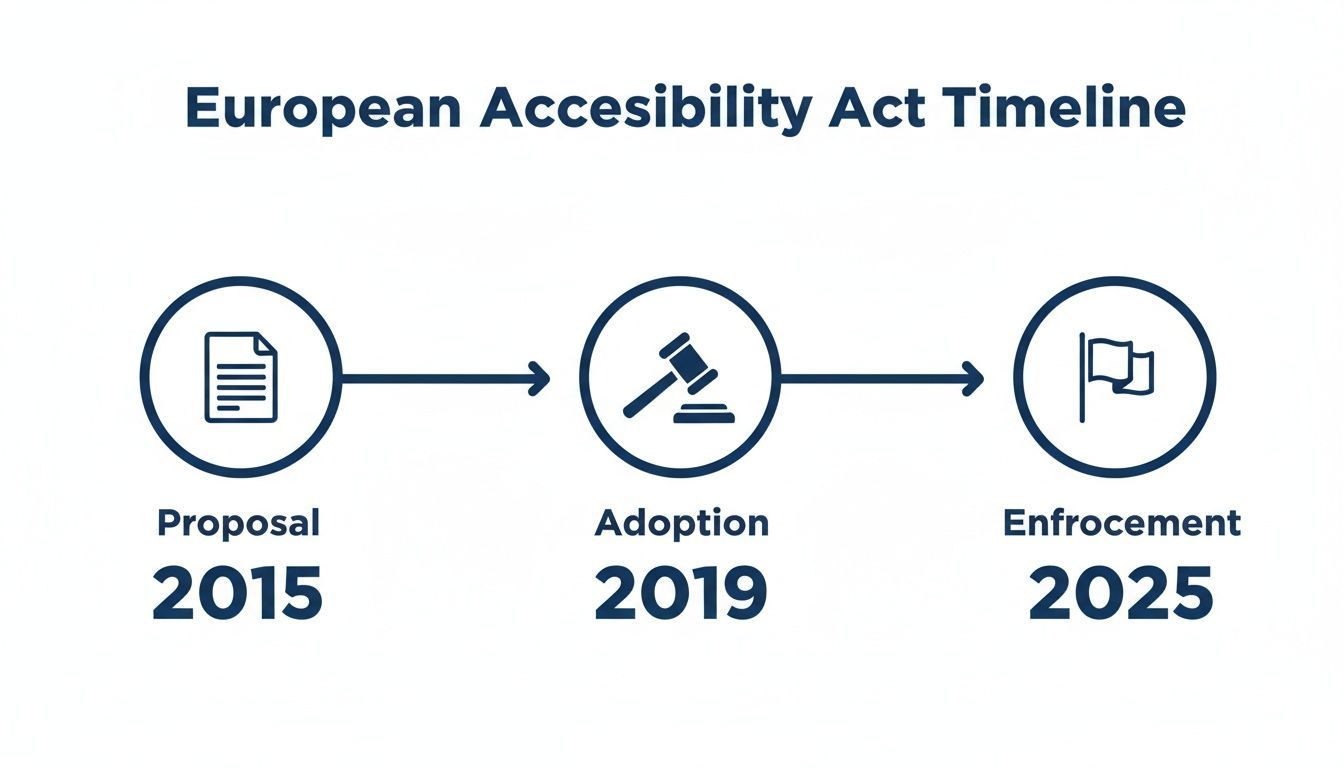
This decade-long process was designed to create a predictable and stable regulatory environment, giving businesses a clear runway to adapt.
What the EAA Means for Your Business
So, what does this actually mean for you? The EAA isn't just another legal hurdle to clear—it's your key to unlocking a massive, and often overlooked, market segment. With over 100 million people in Europe living with some form of disability, compliance opens your digital doors to a significant customer base.
Better yet, the Act simplifies things. By creating a common set of rules, it cuts through the complexity of navigating different accessibility laws in each country. This makes it much easier to operate seamlessly across the entire EU single market.
This new standard covers many of the digital touchpoints your customers use every day, including:
- E-commerce services and websites
- Consumer banking services
- Websites and mobile apps for transport services
- Smartphones and their operating systems
- E-books and dedicated e-readers
Put simply, if you sell these kinds of products or services to customers anywhere in the EU, the EAA applies to you—no matter where your business is based.
By standardizing accessibility, the EAA ensures that businesses can compete on a level playing field, where inclusive design is a core component of market readiness, not an afterthought. Our experience shows this focus enhances overall product quality.
Ultimately, getting on board with the European Accessibility Act is a smart business move. It's an opportunity to build a better experience for all your users, enhance your brand's reputation, and drive real growth. Using an integrated platform can make meeting these requirements much more manageable, turning a complex challenge into a clear path forward.
Understanding the EAA Timeline and Scope
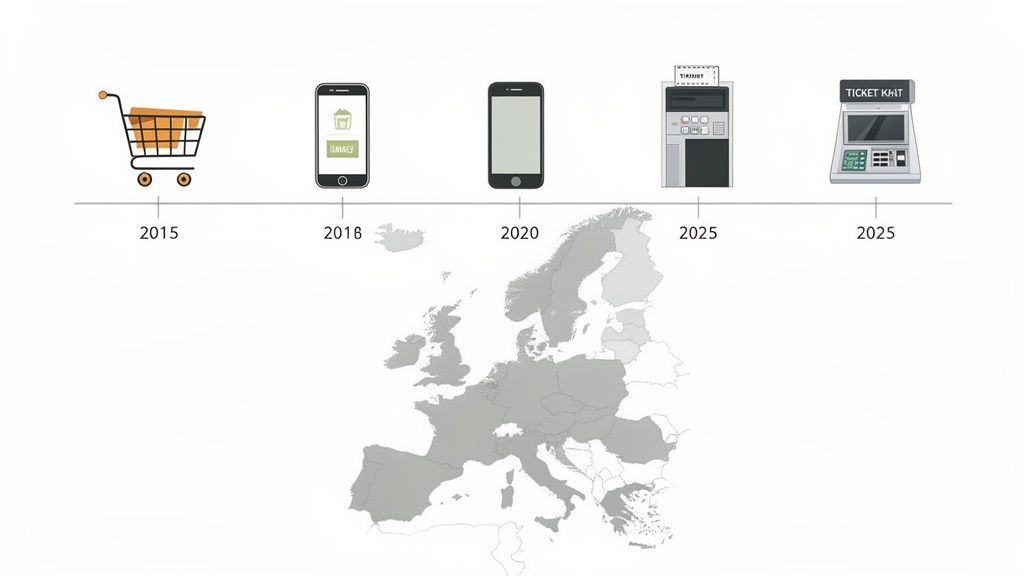
Before you can tackle compliance, you need a solid grasp of where the European Accessibility Act came from and what it actually covers. The best way to think about the EAA is as a mandatory "digital building code" for Europe's single market. Its goal is simple: harmonize accessibility standards to ensure everyone gets the same level of access.
This law is a huge deal, unifying the rules for all 27 EU member states.
The journey started back in 2015 with the European Commission's first proposal. After years of work, it was officially adopted on June 7, 2019, which kicked off the countdown to the June 28, 2025 compliance deadline. If your products aren't compliant by then, you risk being shut out of the massive EU single market—an economic powerhouse generating over €14 trillion annually.
Which Products and Services Are Covered
The European Accessibility Act isn't some vague directive. It has a very specific material scope, targeting private-sector products and services that people rely on for daily life and for participating in the digital economy. If you offer any of the following to consumers within the EU, this law applies to you.
Key covered areas include:
- E-commerce services, along with their websites and mobile apps.
- Consumer banking services, which covers online portals and banking apps.
- Computers and operating systems—think laptops, tablets, and smartphones.
- Ticketing and check-in machines, like the ones you see at airports and train stations.
- E-books and e-readers, plus the software needed to use them.
- Audiovisual media services, such as popular streaming platforms.
As you can see, the EAA’s reach is broad. It covers everything from the device in a person’s hand to the online services they use every day.
The EAA’s scope is intentionally focused on high-impact digital touchpoints. By targeting these core areas, the legislation aims to create the most significant positive change for the largest number of people.
Understanding Important Exemptions
While the scope is wide, the EAA does carve out some specific exemptions. It's just as important to know what isn't covered, at least not immediately. For example, the law isn't fully retroactive, so you don’t have to go back and fix every single piece of old content.
Common exemptions include:
- Pre-recorded media (like videos) published before the June 28, 2025 deadline.
- Office file formats (such as PDFs or Word docs) published before the deadline.
- Content on websites that are officially "archived," meaning they are static and no longer being updated.
These exemptions offer some breathing room, but it's crucial to remember that any new content or major updates to existing platforms must be fully compliant with EAA standards. For a deep dive into how these rules apply in practice, check out our complete guide on EAA compliance. Getting a handle on both the scope and its limits is your first real step toward building a confident and effective compliance strategy.
The Real Cost of Non-Compliance
Let's talk about the real business risks of ignoring the European Accessibility Act. This isn't just a compliance checkbox; it's a critical strategic issue. Getting it wrong doesn't just mean a slap on the wrist. It can lead to steep financial penalties and, even worse, put your access to the entire EU market on the line.
The fines for failing to comply with the European Accessibility Act can be severe, and don't assume there's a one-size-fits-all penalty, either. Each EU member state sets its own rules. In Ireland, for instance, non-compliance can trigger fines up to €200,000 along with orders for expensive, mandatory accessibility audits. Italy is just as serious, with penalties climbing from €5,000 to €150,000. They can also force you to publicly announce your failure to comply—a serious blow to any brand's reputation. You can explore a broader overview of the enforcement landscape for global accessibility regulations on TestParty.ai.
To put the financial risks into perspective, here's a snapshot of how different EU countries are approaching enforcement.
EAA Non-Compliance Penalties in Key EU Member States
| EU Member State | Maximum Fine | Additional Sanctions |
|---|---|---|
| Ireland | Up to €200,000 | Mandatory accessibility audits, market withdrawal orders. |
| Italy | €5,000 to €150,000 | Required public notice of non-compliance, potential product sale suspension. |
| Germany | Up to €100,000 | Market surveillance actions, orders to bring products/services into compliance. |
| France | Up to €75,000 for first offense; €150,000 for repeat offenses. Fines can be issued annually. | Administrative orders to conform, potential daily fines for continued non-compliance (€2,000/day). |
| Spain | Fines range from €301 for minor infractions up to €1,000,000 for very serious, repeated offenses. | Public reprimands, loss of eligibility for public aid or contracts. |
As the table shows, the monetary penalties alone are reason enough to take the EAA seriously. But the financial hit is often just the beginning.
Beyond the Financial Penalties
Honestly, the biggest threat isn't the fine—it's getting completely shut out of the market. National authorities have the power to halt the sale of any non-compliant product or service, not just within their own country but across the entire EU. Imagine your e-commerce platform being blocked overnight or your new app getting yanked from digital stores. This isn't some far-fetched scenario; it's a very real enforcement tool.
The real cost of non-compliance isn't just the fine you might pay tomorrow. It's the revenue you lose today from being locked out of a market of over 450 million consumers.
Think of robust compliance as a form of business insurance. It actively protects your revenue, defends the reputation you've worked so hard to build, and secures your place in a regulated European market for the long haul.
Turning Compliance into a Strategic Advantage
Instead of seeing the EAA as another regulatory headache, smart businesses are using it as a chance to get better. Being proactive about accessibility does more than just avoid penalties—it builds incredible trust with your customers and gives you a stronger footing in the market. When you implement a system for ongoing monitoring and clear compliance reporting, you're building a defensible audit trail that proves your commitment.
- Protect Revenue: Keep your products and services flowing freely across the entire EU market without fear of sudden disruption.
- Safeguard Your Brand: Show the world you are committed to inclusivity. That kind of commitment resonates with modern consumers and builds lasting loyalty.
- Streamline Operations: Instead of scrambling, you can use a managed platform like the WebAbility.io managed platform to make governance simple. It gives you the clear oversight and reporting tools you need to stay on top of compliance with confidence.
Getting ahead of the European Accessibility Act isn't just about following the rules. It’s about turning a legal requirement into a genuine business advantage that pays off in ways that go far beyond just avoiding a fine.
Who Benefits from the EAA and Why It Matters for UX
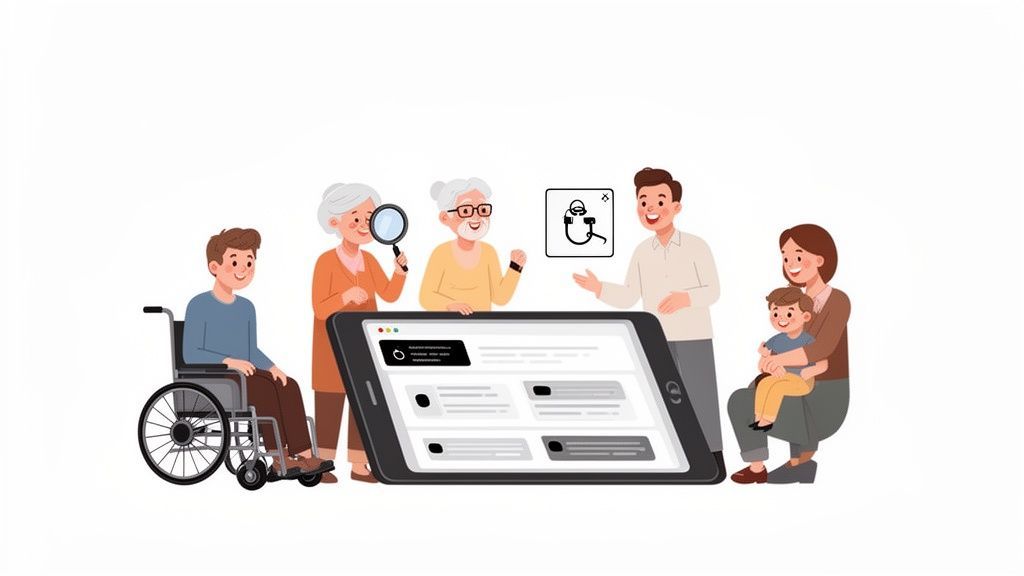
It’s easy to get lost in the legal language and deadlines, but let's be clear: the European Accessibility Act is fundamentally about removing the digital roadblocks that exclude people. Its real purpose is to build a more inclusive online world where everyone can fully participate.
The most obvious beneficiaries are the millions of Europeans with visual, auditory, motor, or cognitive disabilities who have long struggled with poorly designed websites and apps. For them, the EAA means a shift from frustration to function. It’s the difference between being unable to bank online and managing finances independently, or between needing help to book a train ticket and doing it yourself with ease.
The Ripple Effect Accessibility Has on All Users
Here’s the thing, though: the positive impact of the EAA doesn't stop with its primary audience. This is where accessibility becomes a powerful business advantage. When you design for accessibility, you almost accidentally create a better, more intuitive experience for all your users. It’s a phenomenon known as the "curb-cut effect."
Think about the ramps you see on sidewalks. They were built for wheelchair users, but parents with strollers, delivery drivers with dollies, and travelers with rolling luggage use them every day. The same principle applies online:
- High-contrast text: Originally for people with low vision, it also makes your content much easier to read on a phone in bright sunlight.
- Clear and simple language: Essential for those with cognitive disabilities, but it helps everyone—especially someone who is distracted, stressed, or in a hurry.
- Keyboard navigation: A must-have for screen reader users, it's also a favorite shortcut for power users who hate reaching for the mouse.
These "accessibility features" are really just hallmarks of solid design. They make your digital products more reliable, user-friendly, and effective for every single person who visits.
By putting people first, the European Accessibility Act encourages a design philosophy where inclusivity isn't an afterthought but the very foundation of a great user experience. Our experience shows this approach drives higher customer satisfaction and better business results.
Turning Compliance into Conversions
The European Accessibility Act is set to reshape the market, opening up digital doors for over 100 million Europeans with disabilities. This group represents 15-20% of the population in major EU economies but has often been left behind by digital services. With the June 28, 2025, compliance date fast approaching, accessibility is now a core requirement in key sectors, including the e-commerce market, which is projected to hit €800 billion in the EU by 2025. You can find more data in the EAA's market impact report from EASPD.
Using a solution like the WebAbility.io managed platform does more than satisfy a legal requirement. You’re actively improving your website's usability, building stronger brand loyalty, and welcoming a much wider audience. It's how you turn a mandate into a genuine driver for growth and better conversions.
Your Actionable EAA Compliance Checklist
Navigating the rules of the European Accessibility Act can feel overwhelming, but it doesn't have to be. The trick is to stop thinking of compliance as a single, monstrous project and start breaking it down into smaller, more manageable actions. This checklist, based on our firsthand experience helping hundreds of clients, is your roadmap.
Think of it like getting a classic car ready for a big show. You wouldn't just start polishing the chrome. You'd need a plan—inspect the engine, fix the wiring, detail the interior. Each step builds on the last, ensuring you end up with something truly impressive and functional. The same logic applies here.
Step 1: Perform an Initial Accessibility Audit
First things first: you have to know what you’re working with. An accessibility audit is essentially a diagnostic check for your website or app. It’s how you find out exactly where you’re meeting the standards and, more importantly, where you're falling short.
This initial review is absolutely critical. It gives you a benchmark and uncovers specific problems—like images missing alt text, buttons that can’t be used with a keyboard, or color combinations that are impossible for some people to read. With this data in hand, you can build a smart, targeted plan instead of just guessing.
Step 2: Implement a Comprehensive Solution
Once you’ve identified the problems, it's time to get your hands dirty and fix them. This is where a comprehensive accessibility solution comes into the picture. A powerful accessibility interface can instantly handle many common front-end issues and give users direct control over their experience, offering immediate value.
A truly robust solution often blends different approaches:
- Automated Remediation: Think of an AI-driven tool as your first responder, quickly correcting a high percentage of WCAG violations without manual intervention.
- Manual Fixes: For the really tricky, code-level issues your audit uncovers, you’ll need expert developers to go in and perform surgical fixes.
- Ongoing Support: Partnering with an accessibility expert gives you a safety net, ensuring you have the know-how to tackle any new challenges that pop up.
This layered strategy provides both quick wins and the deep, structural fixes needed for long-term compliance. For a much deeper dive, you might find our complete EAA compliance checklist helpful for more granular guidance.
Step 3: Continuously Monitor with a Dashboard
Let's be clear: EAA compliance isn't a "one and done" project. Your website is a living thing—new content gets added, features get updated, and code changes. That's why a centralized compliance dashboard is so vital for ongoing monitoring.
A dashboard is your command center for accessibility. It transforms compliance from a constant guessing game into a data-driven process, giving you the real-time information you need to stay on track.
With a good dashboard, you can watch your compliance score over time, get instant alerts when new problems appear, and easily pull reports for management or regulators. It creates a verifiable audit trail that proves your organization’s ongoing commitment to doing the right thing.
Step 4: Train Your Teams on Accessibility
Technology can only take you so far. To truly succeed, you need to build a culture of accessibility from the inside out. This means training everyone—from your content writers and designers to your developers and QA testers—on the fundamentals of digital inclusion.
When your team understands why these rules exist, they start building accessibility into their work from the very beginning. This proactive approach is infinitely more effective (and cheaper) than constantly fixing problems after they've already been published. It empowers your people to make inclusive decisions part of their daily routine.
Step 5: Create and Publish an Accessibility Statement
Your final step is all about transparency. An accessibility statement is your public commitment to digital inclusion. It’s a document that clearly outlines the standards you’re aiming for, the steps you've taken, and how users can get in touch if they run into a barrier.
Publishing a clear, honest statement does two things: it builds trust with your audience and demonstrates that you take your responsibilities under the European Accessibility Act seriously.
How a Managed Platform Makes EAA Compliance Practical
Meeting the European Accessibility Act requirements can feel like a mountain to climb, but the right platform can turn it into a series of manageable steps. Think of an end-to-end accessibility solution as your command center, simplifying everything from the first audit to the ongoing governance needed to stay compliant.
These platforms bring all the necessary pieces together in one place. Instead of a patchwork of tools and processes, you get a clear, structured workflow that makes sustained compliance a part of your daily operations, not a constant fire drill.
A Single Source of Truth
An integrated platform puts an end to juggling separate tools for scanning, reporting, and fixing issues. Everything you need is under one roof.
So what does that actually give you?
- An AI-Powered User Interface: This is a game-changer. It gives visitors dozens of ways to customize their experience on the fly, like activating screen readers or switching to dyslexia-friendly fonts. Many accessibility barriers are removed instantly, without you lifting a finger.
- A Central Compliance Dashboard: This is your eyes and ears. It gives you a live look at your compliance status through automated scans and clear, detailed reports. You always know where you stand.
- Hands-On Expert Services: Technology is powerful, but human expertise is essential. The platform is backed by accessibility professionals who perform manual audits and handle the complex, code-level remediation that automated tools miss.
The image below gives you a sense of what this looks like. A platform like WebAbility.io consolidates all these moving parts into one easy-to-understand dashboard.
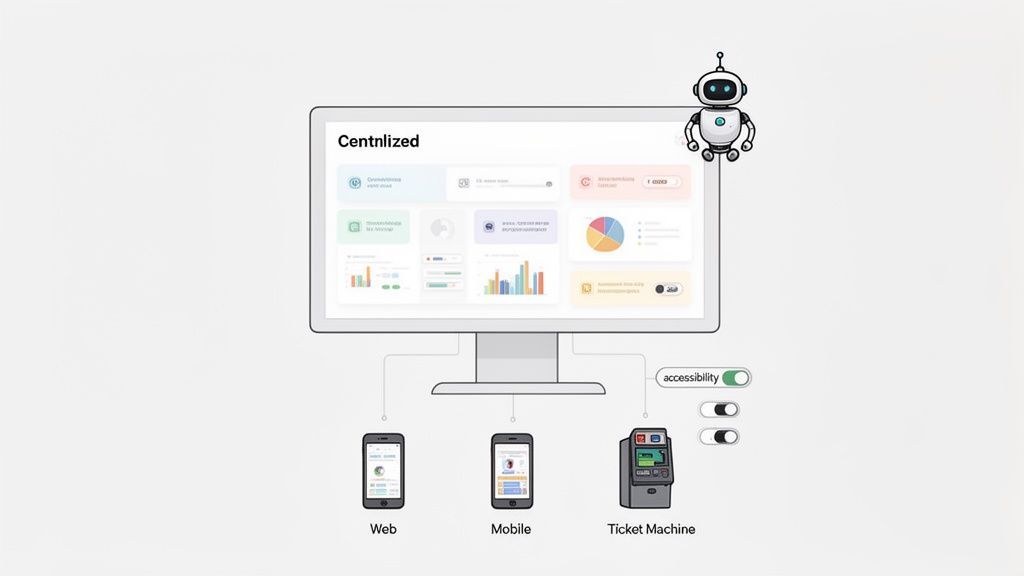
Having this centralized view is crucial for tracking your progress and demonstrating due diligence. It's this combination of smart technology and human expertise that creates a truly robust system for managing your European Accessibility Act obligations. To see exactly how this hybrid model works, you can explore managed accessibility solutions. Ultimately, this approach isn't just about minimizing legal risk—it’s about genuinely improving your digital experience for every single user.
Answering Your Top Questions About the EAA
With the European Accessibility Act (EAA) deadline getting closer, a lot of the same questions keep popping up. Let's clear the air on some of the most common ones we hear from businesses trying to get a handle on what this all means for them.
Does the EAA Apply to My US-Based Company?
This is probably the biggest question we get from companies outside the EU. The short answer is a definitive yes.
The EAA's reach is determined by where your customers are, not where your business is headquartered. If you sell any of the covered products or services to consumers inside the 27 EU member states, you are on the hook for compliance.
What’s the Difference Between the EAA and the Web Accessibility Directive?
It’s easy to get these two confused, but the distinction is actually pretty simple. It all comes down to who they were written for.
- Web Accessibility Directive (WAD): Think public sector. This directive applies to government websites, publicly funded hospitals, universities, and other state-run organizations.
- European Accessibility Act (EAA): This one is for the private sector. It zeroes in on specific products and services that are crucial for daily life, like e-commerce sites, banking apps, e-books, and ticketing services.
So, while the WAD told governments to get accessible, the EAA is now telling businesses to do the same.
Is an Accessibility Widget Enough for EAA Compliance?
An AI-powered accessibility widget or interface provides significant, immediate benefits for users and is a fantastic component of a comprehensive strategy. It empowers visitors by offering instant customizations and addresses numerous front-end barriers automatically.
For robust EAA compliance, this technology works best as part of a holistic approach that also includes professional audits and manual remediation of underlying code. This combination of an interface and expert services creates a powerful, defensible compliance posture.
How Often Should I Run Accessibility Scans?
Thinking of compliance as a one-and-done project is a common mistake. Your website is always changing—new content, new features, new code—so your accessibility efforts have to keep pace.
The best approach is continuous monitoring. Set up regular, automated scans to catch new issues as they appear, and supplement them with periodic manual audits (say, quarterly or annually) by experts. This combination is the gold standard for staying on the right side of the EAA.
Ready to turn EAA compliance from a headache into a real advantage? WebAbility.io gives you an all-in-one platform, blending an AI-powered interface with expert-led audits and a central dashboard for real-time monitoring. Start your free trial of WebAbility.io today and build a digital experience that welcomes everyone.
Quick Questions
Tap to ask AI about this article